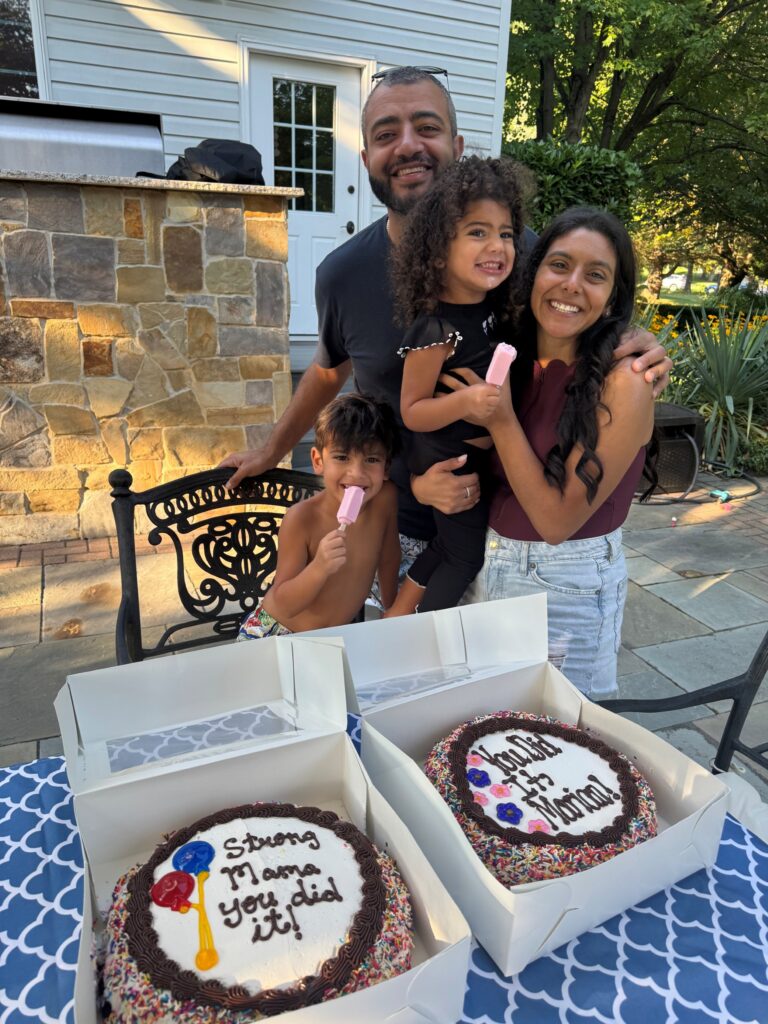
She never imagined she would become one of them.
In 2024, at just 34 years old, Marian discovered a lump in her breast during a self-exam. Two weeks later, she was diagnosed with Stage 2 breast cancer. What followed was a journey through chemotherapy, surgery, radiation, and fertility preservation that would forever change her perspective, both as a patient and as a nurse.
Today, at 36, Marian has completed treatment and is cancer-free. In honor of Breast Cancer Awareness Month, she shares her experience, the importance of knowing your body, and what she learned about finding hope and accepting support when life takes an unexpected turn.
The Moment Everything Changed
You spent years supporting young women facing cancer diagnoses. What prompted you to examine your own breasts that day?“Around that time, I was reviewing dozens and dozens of medical egg-freezing cycles for women under 35 who had been diagnosed with different forms of breast cancer. Seeing those numbers kept weighing on my mind, and something prompted me to do a breast exam. I was in the shower, and I found a small, marble-sized lump. Two weeks later, after a mammogram, MRI, and biopsy, I was diagnosed with Stage 2 breast cancer. What I thought was a small lump turned out to be a tumor the size of an egg.ˮ
At 34, Marian was younger than the age at which routine mammogram screening typically begins for women at average risk. Yet paying attention to a change in her body led her to seek the care she needed.
Preserving Hope for the Future
You were already a mom of two, but you had hoped to grow your family. How did your diagnosis affect those plans?“At the time, I already had two young children, but I had always hoped to expand my family. Because of that, I underwent medical egg freezing before beginning chemotherapy in November 2024, just before Thanksgiving.ˮ
For someone facing cancer, fertility preservation can represent far more than a medical procedure. It can offer an opportunity to protect future family-building options at a time when so much feels uncertain. Certain cancer treatments can affect fertility, making timely conversations about reproductive health especially important. For patients who may want children in the future, access to fertility specialists, clear guidance, and appropriate benefits can help them understand their options before treatment begins.
Having spent 11 years as a fertility nurse, what was it like to suddenly find yourself on the other side of that care?
“Going through fertility preservation myself gave me an entirely new understanding of the work we do. I now know firsthand that what we offer patients is about so much more than an IVF cycle or egg-freezing procedure. For someone facing cancer, it can mean hope. Itʼs a chance to look beyond the fear and still believe in the possibility of the future they dreamed of.ˮ
From Nurse to Patient, and Back Again
What did the months following your diagnosis look like, and where are you today?“The following year brought 20 rounds of chemotherapy, a double mastectomy with reconstruction, lymph node removal, and radiation. It was an incredibly difficult chapter, but I am so grateful to say that today, at 36 years old, I am cancer-free. I completed all my treatments this past May.ˮ
How has your experience changed the way you connect with the members you support today?
“I feel like my experience has given me a new purpose at WIN: to be a light for people during their hardest moments and to remind them that even when life feels uncertain, hope can keep their dreams alive.”
Since returning to work, Marian has found that her personal experience creates a unique connection with some of the people she supports. In fact, some patients have specifically requested to speak with her because they knew she had navigated a cancer diagnosis herself.
“I’m here to hold your hand. I know what this is like. We will get through it.”
The Power of Having People in Your Corner
You’ve spoken about how much support you received from your colleagues at WIN. What did that mean to you during treatment?Throughout her treatment, Marian continued working, supported by a nursing team that rallied around her with encouragement, flexibility, and practical help, including organizing a meal train for her family.
“I was only with WIN for two years at that point, and everyone gave me a lot of grace. We’re all in this together: to help one another and to help our members.”
Marian’s experience is a reminder that a serious diagnosis doesn’t happen in isolation. It can affect someone’s physical health, emotional well-being, family responsibilities, financial security, and plans for the future, often all at once. For employers, providing access to comprehensive benefits, expert clinical guidance, and a supportive workplace can help ease those burdens when employees need it most.
Finding the Wins, Even on the Hardest Days
Looking back, what was one of the hardest parts of your experience, and what advice would you give someone facing a similar diagnosis?For Marian, some of the most difficult days weren’t necessarily during treatment itself. They came in the period between receiving her diagnosis and beginning treatment, when everything felt uncertain. There were appointments to schedule, specialists to coordinate, tests to complete, insurance approvals to navigate, and difficult decisions to make, all while trying to process what was happening.
Marian’s advice is simple, but deeply personal.
“You’re not alone. You don’t have to have it all together all the time. It’s okay to cry and feel it’s unfair. Take everyone’s love. Let people take care of you and love you. It’s your time to be taken care of.”
And through it all, she found strength in a mindset that helped her keep moving forward: finding the wins. Discovering the lump was a win because it prompted her to seek medical attention. Getting answers was a win because it gave her a path forward. Completing her first treatment was a win. Then the next. And the next.
“Look at where your wins are. Every step, waking up each day, is a win.”
A Story of Awareness, Hope, and What’s Possible
Nearly two years after discovering that lump, Marian is looking toward the future with a new perspective on the work she’s dedicated her life to. She’s still a nurse, a mom, and still helping people navigate some of the most personal and challenging moments of their lives. But today, she brings something different to every conversation: the perspective of someone who has sat on both sides of care.Her story is a powerful reminder to pay attention to our bodies, advocate for our health, and seek answers when something doesn’t feel right. It’s also a reminder that when life changes unexpectedly, having access to the right care and people who genuinely support us can make all the difference.
This Breast Cancer Awareness Month, take a moment to get to know your body. Be aware of changes in how your breasts normally look and feel, talk to your healthcare provider about your individual risk and appropriate screening, and don’t hesitate to seek medical attention if something seems different. Because sometimes, the smallest moment of awareness can change everything.